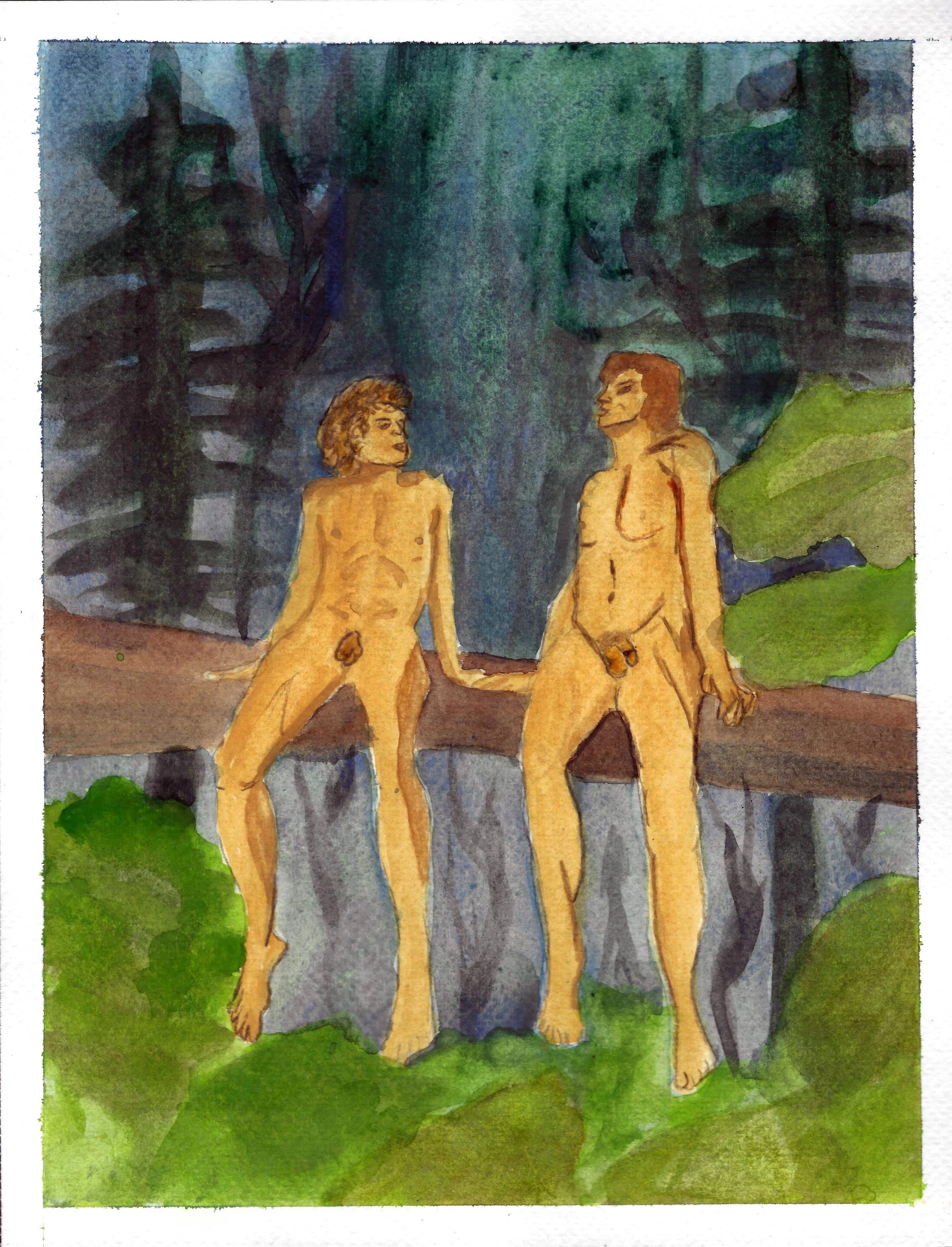
In Where We Can Be, two lovers rest on a fallen tree, surrounded by deep woodland shadows. Their hands meet quietly between them—a small gesture that anchors the painting. I am drawn to these understated expressions of affection, when a touch can reveal the connection between two people.
The warmth of their bodies stands against the cool blues and greens of the forest. Loose watercolor washes suggest a landscape that shelters them, while their relaxed postures express trust and ease. Their nakedness carries that same openness: the freedom to be present with each other without self-consciousness.
Through this piece, I explore the relationship between queer intimacy and the natural world. The forest offers room for tenderness, stillness, and the pleasure of being together.
In Where We Can Be, two lovers rest on a fallen tree, surrounded by deep woodland shadows. Their hands meet quietly between them—a small gesture that anchors the painting. I am drawn to these understated expressions of affection, when a touch can reveal the connection between two people.
The warmth of their bodies stands against the cool blues and greens of the forest. Loose watercolor washes suggest a landscape that shelters them, while their relaxed postures express trust and ease. Their nakedness carries that same openness: the freedom to be present with each other without self-consciousness.
Through this piece, I explore the relationship between queer intimacy and the natural world. The forest offers room for tenderness, stillness, and the pleasure of being together.